
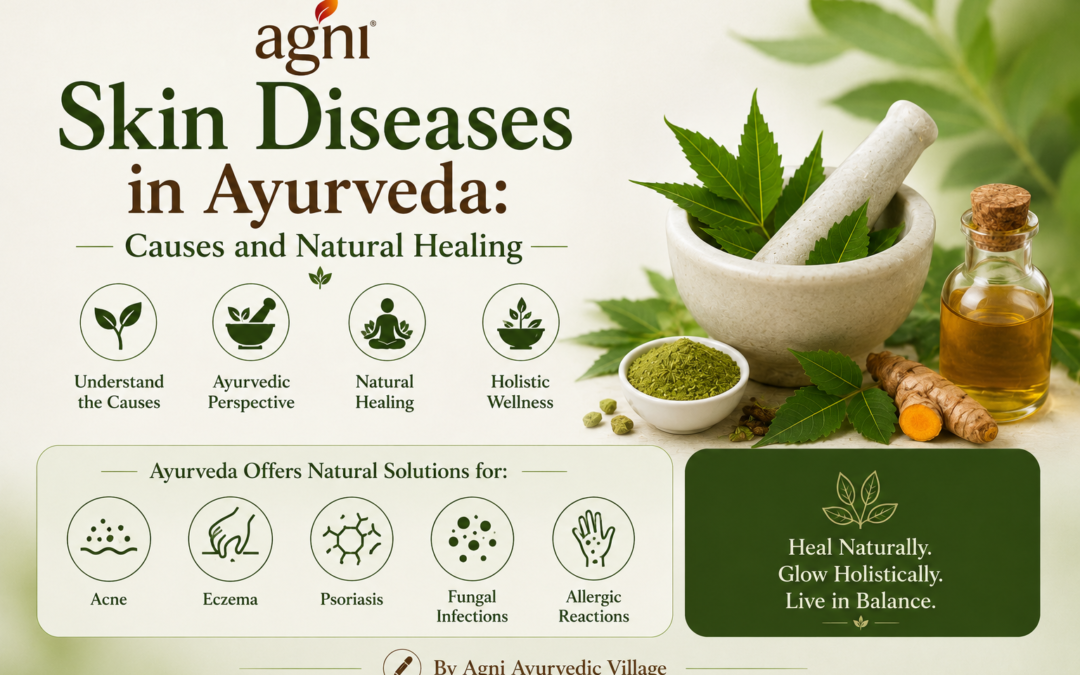
In Ayurveda, the skin (Twak) is not merely an external covering but a reflection of the inner state of the body, mind, and consciousness. Classical Ayurvedic texts such as the Charaka Samhita, Sushruta Samhita, and Ashtanga Hridaya describe skin diseases under the broad category of Kushtha Roga, encompassing a wide spectrum of dermatological conditions. These ancient treatises emphasize that the origin of skin disorders lies deep within the imbalance of Doshas, vitiation of Rakta Dhatu (blood tissue), and accumulation of Ama (toxins).
Unlike modern symptomatic approaches, Ayurveda looks at skin diseases as systemic disorders requiring holistic correction. The timeless wisdom of Ayurveda for skin diseases teaches that true healing begins by addressing the root cause rather than merely suppressing external symptoms.
Understanding the Ayurvedic View of Skin
According to Acharya Sushruta, the skin is composed of seven layers, each responsible for specific functions and susceptible to different disorders. The health of these layers depends upon the balance of Vata, Pitta, and Kapha, along with the purity of blood and proper nourishment of tissues. Among these, Pitta Dosha and Rakta Dhatu play a predominant role in skin health. When aggravated, they lead to conditions such as inflammation, redness, burning sensation, and eruptions. Classical descriptions of Kushtha explain that simultaneous vitiation of all three Doshas along with tissues like Rasa, Rakta, Mamsa, and Lasika leads to chronic and stubborn skin diseases.
Causes of Skin Diseases in Ayurveda
Ayurveda identifies several causative factors (Nidana) responsible for skin disorders. These causes are often linked to improper diet, lifestyle, and mental habits.
1. Improper Diet (Ahara)
Consumption of incompatible foods (Viruddha Ahara) is considered one of the primary causes. Examples include:
- Milk with sour or salty foods
- Fish combined with dairy
- Excess intake of fermented, spicy, and oily foods
- Overconsumption of sugar and processed foods
Such dietary habits lead to toxin formation and vitiation of blood.
2. Impaired Digestion (Agni Dushti)
Weak digestive fire results in the formation of Ama, which circulates in the body and deposits in tissues, including the skin, leading to various disorders.
3. Lifestyle Factors (Vihara)
- Irregular sleep patterns
- Excessive sun exposure
- Sedentary habits
- Suppression of natural urges
These disturb the Doshas and contribute to disease manifestation.
4. Psychological Factors
Ayurveda also acknowledges the influence of mind on skin health. Stress, anger, fear, and anxiety aggravate Doshas, particularly Pitta, leading to flare-ups in conditions like acne, psoriasis, and eczema.
5. Environmental and Seasonal Factors
Seasonal changes and environmental toxins can also disturb the equilibrium of Doshas, especially when the body is not properly adapted through seasonal regimens (Ritucharya).
Types of Skin Diseases in Ayurveda
Classical texts broadly classify Kushtha into:
- Mahakushtha (major skin diseases)
- Kshudra Kushtha (minor skin diseases)
Conditions resembling eczema, psoriasis, leucoderma, acne, and fungal infections are described with remarkable clinical detail in Ayurveda.
Principles of Natural Healing in Ayurveda
The treatment of skin diseases in Ayurveda is based on three fundamental principles:
1. Shodhana (Purification)
Detoxification therapies such as Vamana (therapeutic emesis), Virechana (purgation), and Raktamokshana (bloodletting) are described as highly effective in eliminating vitiated Doshas and purifying blood. Ayurvedic journals highlight that Virechana Karma is particularly beneficial in Pitta-dominant skin disorders due to its action on liver and blood purification.
2. Shamana (Pacification)
Herbal formulations are used to balance Doshas and restore internal harmony. Commonly used herbs include:
- Neem (Azadirachta indica) – blood purifier
- Manjistha (Rubia cordifolia) – improves complexion
- Haridra (Turmeric) – anti-inflammatory and antimicrobial
- Khadira (Acacia catechu) – beneficial in chronic skin disorders
These herbs are often administered in decoctions, powders, or medicated ghee preparations.
3. Ahara and Vihara (Diet and Lifestyle)
Dietary discipline is central to healing. Ayurveda recommends:
- Light, easily digestible foods
- Bitter and astringent tastes
- Fresh vegetables and seasonal fruits
- Adequate hydration
Avoidance of incompatible and heavy foods is strictly emphasized.
A regulated lifestyle including proper sleep, stress management, and daily routines (Dinacharya) plays a crucial role in recovery.
External Therapies and Care
Ayurveda also prescribes various external applications such as:
- Herbal pastes (Lepa)
- Medicated oils (Taila)
- Therapeutic baths
These treatments help soothe the skin, reduce inflammation, and promote healing. The holistic approach of Ayurvedic skin treatment integrates both internal purification and external care for lasting results.
The Role of Blood Purification
Rakta Dhatu plays a central role in skin diseases. Classical Ayurvedic texts repeatedly emphasize Rakta Shodhana (blood purification) as a cornerstone of treatment. Modern Ayurvedic studies also support that detoxification therapies combined with blood-purifying herbs yield significant improvement in chronic dermatological conditions.
Importance of Individualized Treatment
One of the unique aspects of Ayurveda is its personalized approach. Treatment is not disease-centered but patient-centered. Factors such as constitution (Prakriti), Dosha imbalance, digestive strength, and disease stage are carefully assessed before designing a treatment plan.
This individualized approach is what makes ayurveda for skin diseases highly effective in addressing chronic and recurring conditions.
Conclusion
Ayurveda offers a profound and time-tested understanding of skin diseases by addressing their root causes rather than merely managing symptoms. Through a combination of detoxification, herbal medicine, dietary discipline, and lifestyle correction, it provides a sustainable path to healing.
In a world increasingly burdened with chronic skin conditions, the wisdom of Ayurveda reminds us that true beauty and health arise from internal balance. By aligning with natural principles and maintaining harmony within the body and mind, lasting skin health can be achieved in the most holistic and authentic way.
By Dr A Bhuvaneshwari Devi
Ayurveda Expert | Agni Ayurvedic Village